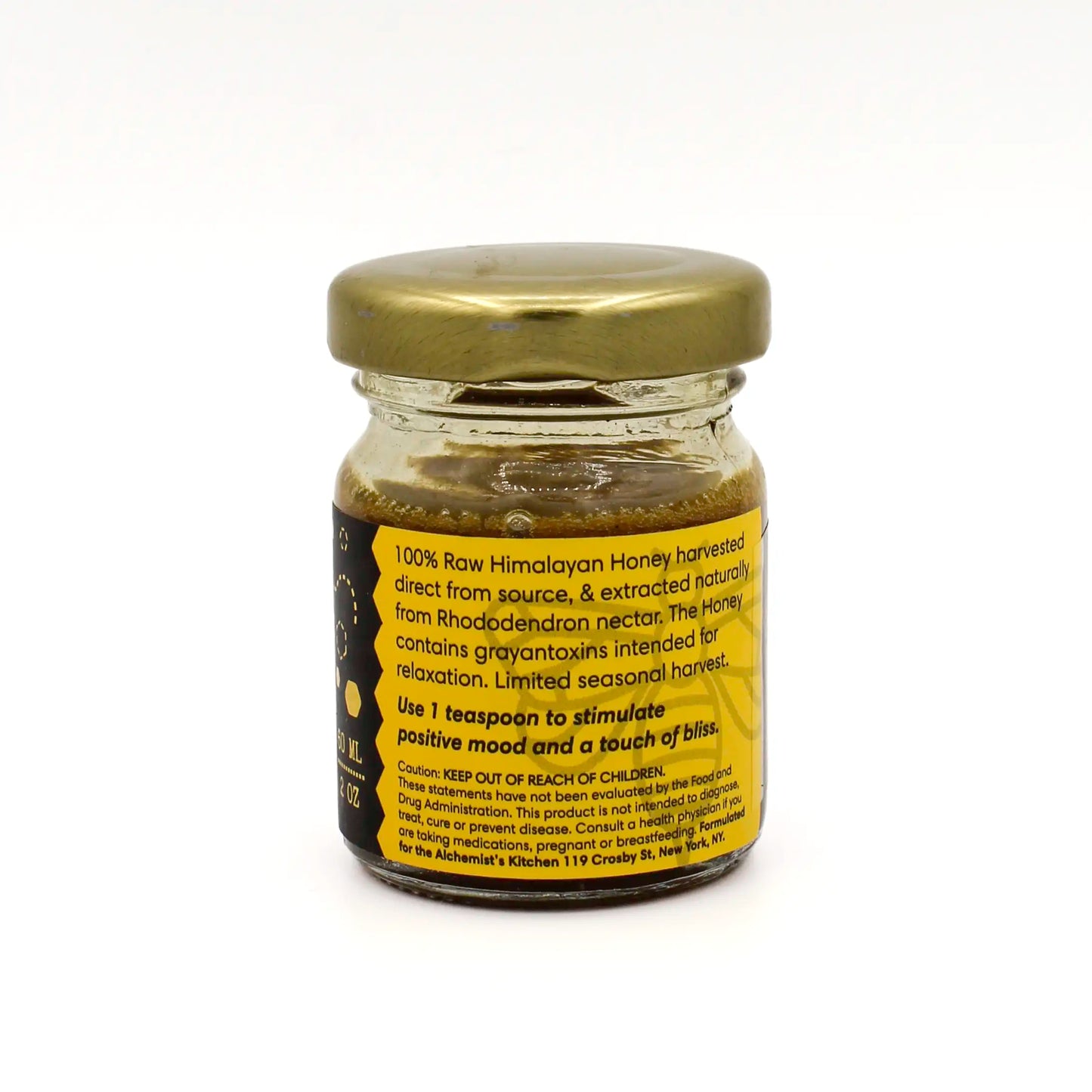



Mad Honey | Natural Mood Elevator from Nepal
Mad Honey | Natural Mood Elevator from Nepal
Wild-harvested rhododendron honey from Nepal
Raw, unfiltered honey from Himalayan rhododendron nectar, gathered in a limited seasonal harvest and taken by the teaspoon.
- Wild-harvested in Nepal
- Gathered by Gurung honey hunters
- Rhododendron nectar
- Unfiltered and unpasteurised
Couldn't load pickup availability
- Evening ritual
- Shared tasting
- Stirred into tea
How to Use
How to Use
Recommended use: Begin with a small amount, a quarter teaspoon, to experience its effects.
Ways to take it: Straight from the spoon, stirred into warm (not hot) tea, or drizzled on toast.
Best consumed mindfully and in moderation.
Ingredients + Materials
Ingredients + Materials
100% raw Himalayan honey, harvested direct from source and extracted naturally from rhododendron nectar. Limited seasonal harvest.
Product Details
Product Details
Each jar holds 50 mL of 100% raw Himalayan honey, extracted naturally from rhododendron nectar. It is raw, unfiltered and unpasteurised, and contains naturally occurring grayanotoxins. Suggested serving is 1 teaspoon. Limited seasonal harvest. Formulated for The Alchemist's Kitchen, 119 Crosby St, New York.
Origin + Sourcing
Origin + Sourcing
Raw Himalayan honey, harvested direct from source in a limited seasonal harvest. Formulated for The Alchemist's Kitchen, 119 Crosby St, New York.
Safety + Cautions
Safety + Cautions
Begin with a small amount, a quarter teaspoon, to experience its effects. Best consumed mindfully and in moderation.
This honey contains naturally occurring grayanotoxin compounds from wild rhododendron nectar.
Keep out of reach of children. Do not exceed the recommended serving. Consult an appropriate healthcare professional before use if pregnant, breastfeeding, taking medication, or managing a health condition.
Frequently Asked Questions
Frequently Asked Questions
How much should I take?
1 teaspoon.
Is it raw?
Yes. It is raw, unfiltered and unpasteurised.
Does it contain grayanotoxins?
Yes. They occur naturally in honey made from rhododendron nectar.
Why is it sometimes out of stock?
It comes from a limited seasonal harvest.
Share
Share & Inspire
View full details